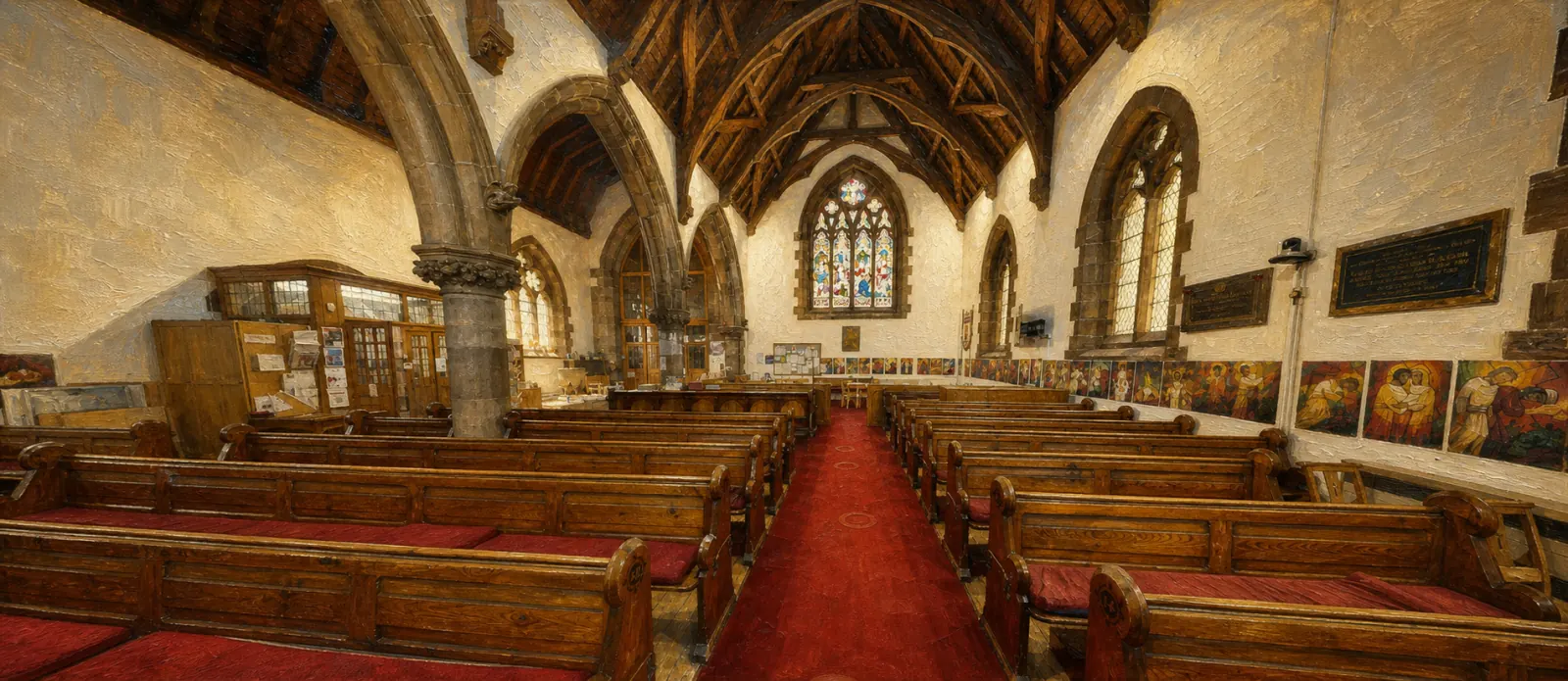
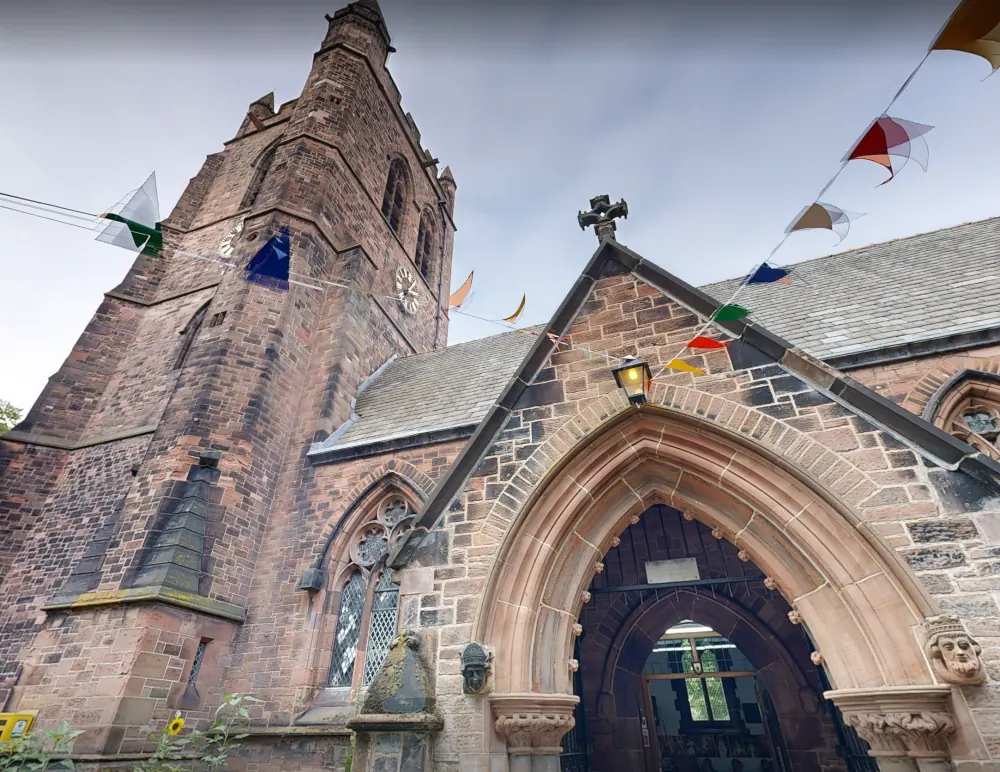
This project invites visitors to experience St Thomas's Church in a new way. Through a detailed three-dimensional digital twin, the building can be explored remotely, studied closely, and preserved as a lasting record for future generations.
Digital preservation supports heritage learning, widens access for those unable to visit in person, and creates a careful document of the building as it stands today.
Explore the church remotely from anywhere in the world
Appreciate architectural details close up
Support heritage learning and education
Improve accessibility to the building
Preserve a digital record for future generations
A digital heritage experience by Heritage Dynamic C.I.C.
✿
Digital Preservation
Explore St Thomas's in 3D
Move through the church at your own pace, look closely at its interior and experience the building from wherever you are.
This third-party content is available after you accept optional content.
At a Glance
1868
Present church built
Grade II
Listed since 1983
E. G. Paley
Architect
Open
For worship
Heritage
The Story of St Thomas’s
From the first church of 1838 to today’s conservation work, this timeline is based on the statutory list entry, the Church of England Heritage Record and the church’s official heritage guide.
1838
The first St Thomas’s
The first St Thomas’s Church was consecrated on 12 October 1838. The present building was constructed as its successor.
1868
The present church
The present sandstone church was built to a design by E. G. Paley of Lancaster. Its east window, made by Clayton and Bell and depicting the Passion and Resurrection, was also given in 1868.
1878
Chancel and sanctuary
The chancel and sanctuary were dedicated and brought into use on Easter Day, 21 April 1878. Their decoration includes patterned tilework and a richly treated ceiling.
1952
The Memorial Chapel
The chapel commemorating parishioners who died in the Second World War was dedicated by the Bishop of Chester on 12 October 1952. It is now known as the Lady Chapel.
1983
Grade II listing
St Thomas’s was added to the National Heritage List for England at Grade II on 23 December 1983, recognising its special architectural and historic interest.
2025
Conservation in progress
Historic England records the church as being in poor condition but with an improving trend, and notes that a repair scheme is in progress. The church remains open for worship.
Architecture
Architecture and Craftsmanship
The Grade II-listed church is a Victorian Gothic building in pinkish-red sandstone. These verified details can be found while exploring the digital twin.
Plan and West Tower
The church has a four-bay nave, south aisle, north transept, vestry and organ loft, and a two-bay chancel. A four-stage battlemented tower stands at the west end.
Follow the long east-west axis, then look west for the tower and its octagonal south-east turret.
Stone and Slate
The walls are built of pinkish-red sandstone, while the graded roofs are covered with Westmorland green slate.
Compare the warm masonry with the green-grey roof covering and the contrasting window tracery.
Nave Arcade and Roof
Inside, the nave arcade has round columns with carved stiff-leaf capitals, beneath an arch-braced timber roof.
Look closely at the foliage carving on the capitals and the rhythm of the roof braces overhead.
Chancel Tilework
Richly coloured patterned tiles in the chancel form a memorial to William Hayes, Vicar of Stockton Heath from 1852 to 1875.
Notice how the floor and wall decoration distinguish the chancel from the nave.
East Window
The 1868 east window by Clayton and Bell depicts the Passion and Resurrection. It was given by Susannah, wife of Gilbert Greenall of Walton Hall.
Find the narrative scenes and watch how coloured light changes the sanctuary.
Chancel Ceiling
The chancel ceiling decoration was carried out by Messrs Chandley of Warrington, with figures painted by Mary Farren of Cambridge.
Look upward for the painted figures; the church guide records that their faces were based on local churchwomen.
Lady Chapel
Now the Lady Chapel, this space was fitted as a memorial to parishioners who died in the Second World War. Its screen and fittings were made by Gillam of Sheffield.
Look for the chapel screen, dedicated furnishings and memorial purpose of the space.
South Aisle Windows
Memorial glass includes Jesus blessing children in memory of Horace Goad Crosfield and an Annunciation window commemorating Robert and Agnes Davies.
Study the inscriptions and imagery to connect the windows with the people they commemorate.
Look More Closely
How a Church Speaks
Church buildings communicate through their form, materials and use. Explore the different ways a sacred space can be read.
The layout of a church supports Christian worship. The nave gathers the people, the chancel and sanctuary focus on the altar and the sacraments, and the font marks the entrance into the Christian community. Orientation, light and silence all shape the experience of prayer.
Community
More Than a Building
A church is both a place of Christian worship and a gathering place for the surrounding community. It is a setting for important life events, a keeper of local memory, and a building cared for across generations.
St Thomas's remains open for worship. Its memorial chapel, windows, inscriptions and gifts preserve connections with parishioners and local families across generations.
Faith
A place set aside for Christian prayer, worship and the sacraments of the Church of England.
Community
A gathering space for local people across the seasons of life, from celebration to remembrance.
Shared Heritage
A building held in trust for future generations, cared for and documented for the common good.
Learning
Explore and Learn
Interactive activities to help visitors of all ages understand church architecture and heritage. These are general educational activities and do not assume specific facts about St Thomas’s.
8 Heritage Quiz
Visit
Plan Your Visit
Please check information before travelling. Details will be added as they are confirmed.
Location
Full address details will be added once confirmed.
Opening & Services
Please check with the church before making a special journey.
Accessibility
Accessibility information is currently being reviewed.
Public Transport
Local travel information will be added shortly.
Parking
Parking information will be added once confirmed.
Visitor Guidance
Please remember that St Thomas’s is a place of worship. Visitors should respect services, private prayer and church activities.
Map and directions will appear here once the church location has been confirmed.
Contact
Connect With St Thomas’s
Please use the links below once direct contact information has been confirmed.
This third-party content is available after you accept optional content.
12 London Road, Stockton Heath, Warrington WA4 6HJ